


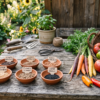


Simple Seed Saving Guide for Beginners

Simple Seed Saving Guide for Beginners (India-Friendly)
Save seeds. Save money. Save biodiversity.
Why Save Seeds? Saving seeds allows you to grow your favorite vegetables year after year for free. It also helps preserve traditional, heirloom varieties and supports local food security. All you need are open-pollinated (heirloom) seeds, like the ones we offer at Hooga Seeds.
Basic Tips Before You Start
Choose heirloom or open-pollinated seeds. Hybrids and GMOs do not grow true to type.
Let fruits fully mature on the plant before collecting seeds.
Label everything clearly with the vegetable name and date.
Dry seeds completely before storing to prevent mold.
Store in cool, dry, dark places using glass jars, paper envelopes, or cloth bags.
Vegetable-by-Vegetable Seed Saving Guide
Tomato
Pollination: Self-pollinating
How to save: Let the fruit over-ripen on the vine. Scoop out the seeds and let them ferment in water for 2 to 3 days to remove the jelly coating. Rinse well and dry on paper.
Shelf life: 4 to 6 years
Chilli and Capsicum
Pollination: Self-pollinating
How to save: Let the chillies dry fully on the plant. Collect the seeds, remove any remaining pulp, and let them air-dry completely.
Shelf life: 2 to 3 years
Brinjal (Eggplant)
Pollination: Can cross-pollinate, but usually stable
How to save: Allow the fruits to become hard and overripe. Cut them open, soak the seeds in water, and separate the good seeds, which will sink to the bottom. Rinse and dry.
Shelf life: 3 to 4 years
Coriander
Pollination: Cross-pollinates
How to save: Let the plants flower and dry naturally. Cut the stalks and hang them upside down inside a paper bag. Collect the seeds when they turn fully brown.
Shelf life: 3 to 5 years
Beans (All types)
Pollination: Self-pollinating
How to save: Let the pods dry completely on the plant until they rattle when shaken. Shell the beans and dry them thoroughly indoors.
Shelf life: 3 to 4 years
Maize (Corn)
Pollination: Cross-pollinates heavily
How to save: Allow the cobs to dry on the plant. Remove the kernels and store them. It is recommended to grow at least 20 or more plants to ensure genetic diversity.
Shelf life: 1 to 2 years
Okra (Lady’s Finger)
Pollination: Cross-pollinates
How to save: Leave the pods on the plant until they turn brown and brittle. Crack them open and dry the seeds further.
Shelf life: 2 to 3 years
Cucumber
Pollination: Cross-pollinates
How to save: Let the cucumbers become very large and yellow. Scoop out the seeds, ferment them in water for 2 to 3 days, rinse, and dry well.
Shelf life: 5 years
Pumpkin, Bottle Gourd, and Ridge Gourd
Pollination: Cross-pollinates
How to save: Let the fruits fully ripen and harden on the vine. Scoop out the seeds, wash away the stringy pulp, and dry completely.
Shelf life: 4 to 6 years
Amaranth and Palak (Spinach)
Pollination: Cross-pollinates
How to save: Let the plants bolt and form seeds. When completely dry, cut the seed heads, crush them, winnow away the chaff, and store the clean seeds.
Shelf life: 2 to 4 years
How to Store Seeds Properly
Use paper envelopes, glass jars, or cloth bags.
Always label the container with the name, date, and variety.
Store in a cool, dry, and dark place.
Add dried neem leaves or silica packets to avoid insects and moisture.
Avoid plastic containers if there is any risk of residual moisture.
Pro Tip: Start with easy crops like tomato, okra, beans, and chillies in your first year of seed saving.
Ready to Begin? Get started with 100% heirloom, open-pollinated, non-GMO seeds from Hooga Seeds. Our seeds are grown by Indian farmers using traditional methods, making them perfect for saving, sharing, and growing year after year.
Browse our seed collection now at www.hoogaseeds.com/shop and join our growing community of home gardeners and seed savers on Instagram @hoogaseed_keepers_collective. Let’s regrow our heritage, one seed at a time.


