


50%
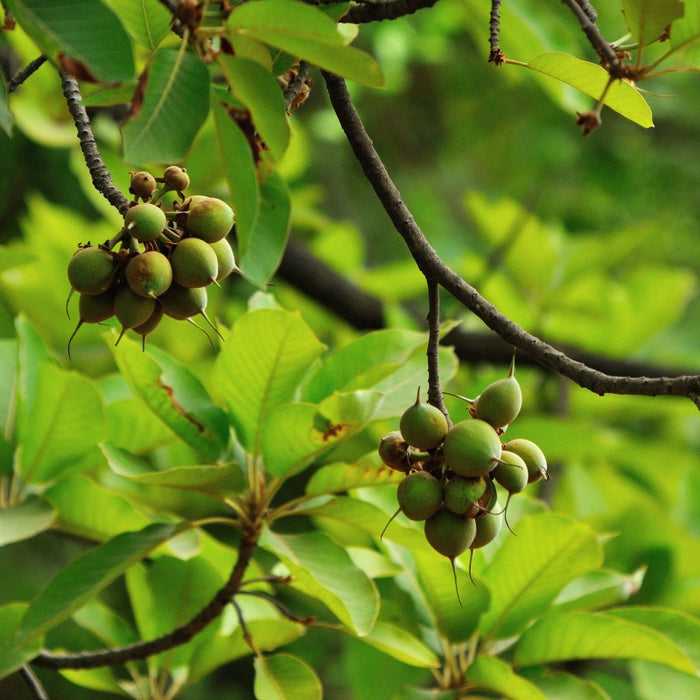
Mahuva (Madhucal Longifolia)
Madhuca longifolia is a versatile and valuable tree, deeply embedded in the ecology, economy, and culture of the regions where it is native. Its many uses make it a critical resource for sustainable development in rural areas.
Out of stock
Out of stock
Description
Madhuca longifolia, commonly known as Mahuva, Mahua, Butter Tree, or Indian Butter Tree, is a significant tree species native to India and other parts of South Asia. It is revered for its economic, medicinal, and cultural importance. Below is a detailed overview:
Description:
- Size and Growth: Madhuca longifolia is a medium to large-sized deciduous tree, typically growing to a height of 15 to 20 meters. It has a dense, spreading crown and a straight trunk, often with rough, dark brown to blackish bark.
- Leaves: The leaves are simple, alternate, and oblong, ranging from 10 to 20 cm in length. They are leathery, dark green, and glossy, with a pointed tip and smooth margins.
- Flowers: The tree produces small, cream-colored flowers that are highly fragrant. These flowers bloom in dense clusters during the spring (around March to May) and are rich in nectar, attracting various pollinators, especially bees.
- Fruit: The fruit of Madhuca longifolia is a fleshy berry, typically 2 to 5 cm in length, which turns yellow or orange when ripe. The fruit contains one to four seeds, which are rich in oil.
Habitat and Distribution:
- Native Range: Madhuca longifolia is native to the Indian subcontinent, particularly in the central and northern regions of India, as well as parts of Nepal, Sri Lanka, and Bangladesh.
- Habitat: It is commonly found in tropical dry deciduous forests, often in areas with low to moderate rainfall. The tree is highly drought-tolerant and can thrive in a variety of soil types, including poor, rocky, and sandy soils.
Uses:
- Edible Products:
- Flowers: The flowers of the Mahua tree are edible and are used to produce a variety of traditional foods. They are also fermented to produce an alcoholic beverage known as Mahua liquor, which is a staple in many tribal communities in India.
- Fruits: The fruits are also consumed, either raw or cooked. They are rich in vitamins and minerals.
- Oil: The seeds of the tree yield Mahua oil, which is used in cooking, as a lamp oil, and in soap making. The oil is also used in traditional medicine.
- Medicinal Uses: Various parts of the Mahua tree are used in traditional medicine. The flowers, bark, seeds, and oil have been used to treat a range of ailments, including skin conditions, digestive issues, and respiratory problems. The tree is also used in Ayurvedic practices.
- Cultural Significance: Mahua holds significant cultural importance, particularly among tribal communities in India. The tree is often considered sacred, and its flowers and fruits are integral to local traditions, rituals, and festivals.
- Timber and Fuel: The wood of the Mahua tree is hard and durable, making it suitable for construction, furniture, and agricultural implements. Additionally, it is used as a source of fuelwood.
- Environmental Uses: The tree is planted for soil conservation, afforestation, and agroforestry. Its deep root system helps prevent soil erosion, and it improves soil fertility through leaf litter.
Ecological Importance:
- Pollinator Attraction: The flowers of Madhuca longifolia attract a variety of pollinators, including bees, which are crucial for the production of honey. The tree is also important for sustaining local wildlife, providing food and habitat.
- Soil Improvement: The tree’s leaf litter decomposes into rich humus, improving soil fertility and structure.
Cultivation and Care:
- Climate: Mahua thrives in tropical and subtropical climates. It can withstand temperatures ranging from 0°C to 45°C but prefers warm, humid conditions.
- Soil: It is adaptable to various soil types but prefers well-drained, sandy to loamy soils.
- Propagation: The tree is typically propagated from seeds. Seedlings require care during the early stages, particularly in ensuring adequate water and protection from pests.
Challenges:
- Pests and Diseases: While Madhuca longifolia is generally hardy, it can be susceptible to pests like caterpillars and diseases like powdery mildew.
- Overexploitation: In some areas, overharvesting of flowers and seeds for commercial purposes can threaten the tree’s long-term viability.
Economic Importance:
- Income Generation: Mahua is a source of livelihood for many rural and tribal communities, particularly through the sale of its flowers, fruits, and seeds.
- Industry: Mahua oil is used in the production of biodiesel, soaps, and cosmetics, making it an important resource in various industries.
Madhuca longifolia is a versatile and valuable tree, deeply embedded in the ecology, economy, and culture of the regions where it is native. Its many uses make it a critical resource for sustainable development in rural areas.
Additional information
| Weight | 15 kg |
|---|
Related products
17%
Original price was: ₹120.00.₹100.00Current price is: ₹100.00.
20%
Original price was: ₹150.00.₹120.00Current price is: ₹120.00.
38%

Original price was: ₹80.00.₹50.00Current price is: ₹50.00.
50%
Original price was: ₹99.00.₹50.00Current price is: ₹50.00.
17%
Original price was: ₹60.00.₹50.00Current price is: ₹50.00.
Recently viewed
17%
Original price was: ₹120.00.₹100.00Current price is: ₹100.00.
17%

Original price was: ₹120.00.₹100.00Current price is: ₹100.00.
17%

Original price was: ₹120.00.₹100.00Current price is: ₹100.00.
50%
Original price was: ₹100.00.₹50.00Current price is: ₹50.00.

Mahuva (Madhucal Longifolia)
Original price was: ₹100.00.₹50.00Current price is: ₹50.00.Out of stock


Reviews
There are no reviews yet.